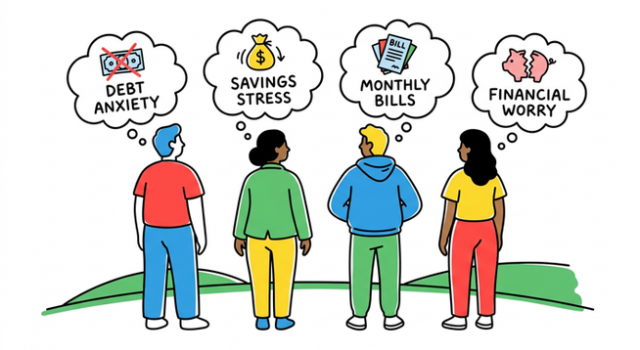
Money worries are about far more than household budgets, with financial insecurity capable of having a profound impact on mental health, according to psychotherapist Kyle MacDonald.
MacDonald said the psychological relationship people have with money can be just as important as the amount they earn.
He said rising costs were understandably stressful, particularly for people who genuinely could not afford essentials such as food, rent or mortgage payments.
But for those able to plan, he encouraged people to approach financial decisions rationally rather than emotionally.
“Money decisions have to be, as much as possible, made rationally, not made emotionally,” MacDonald said, pointing to impulse purchases and spending to make ourselves feel better as common traps.
He said people often inherited their attitudes towards money from their families and needed to understand what money meant to them personally.
For some, money could represent success, security or even a way of buying friendship or managing stress.
Listeners shared stories of financial hardship, including job losses, debt, rising living costs and the struggle to ask for help.
One caller, Bronny, described losing her job, independence and financial security, saying the experience had affected her self-esteem and left her questioning whether she was still employable.
She said helping other people had helped her through difficult periods, while simply having someone sit with her when she felt lonely or overwhelmed had been particularly valuable.
Another caller, Louise, described relying on financial management support and food parcels while raising children, before eventually becoming mortgage-free.
She said getting help had initially involved overcoming the shame of asking for it, but ultimately removed much of the worry.
MacDonald said financial hardship could push people into “survival mode”, where their focus narrowed to the immediate future rather than longer-term planning.
The solution, he said, was not necessarily to try to solve everything alone, but to seek support and “utilize another mind” by talking to trusted friends, family members or professionals.
Host Hamish Williams said planning should extend beyond finances to other areas of life, including sleep, exercise, health and social connection.
The programme also heard from listeners about compulsive spending, budgeting on very low incomes and the practical benefits of automatically paying essential bills as soon as income arrives.
MacDonald encouraged people who were struggling to seek help from their GP, a counsellor or Citizens Advice Bureau.
The central message from the discussion was that financial hardship should not be viewed as a personal failure, and that asking for help can be an important first step towards regaining a sense of control.