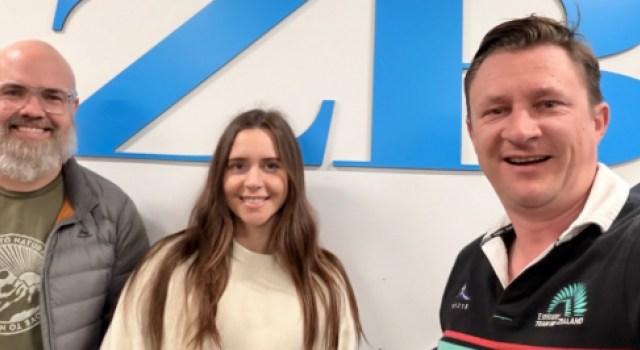
A published author who spent years battling addiction alongside bipolar disorder says learning to accept difficult emotions and ask for help became central to her recovery.
Speaking on The Nutters Club on Newstalk ZB, Charlotte Bell described how alcohol became a coping mechanism from a young age as she struggled with pressure, stress and expectations she had placed on herself.
She said she first discovered alcohol at around 12 and quickly associated drinking with relief.
“All that pressure has been released. This is how you’re supposed to feel,” she recalled.
Charlotte said she continued to achieve academically and play sport, using those achievements to convince herself her drinking was under control.
But beneath the surface, her mental health was deteriorating.
She began experiencing extended periods of high energy and intense productivity, followed by long periods of depression. As she got older, those episodes became increasingly severe.
In her 20s, Charlotte was eventually diagnosed with bipolar one after seeking professional help.
She described reaching a point where mania, sleep deprivation and hallucinations had become frightening enough that she was willing to accept whatever treatment might help.
However, the diagnosis did not immediately end her problems with addiction.
Over several years, Charlotte moved in and out of alcohol and drug treatment, detox and respite services before entering residential rehabilitation at 30.
She spent three months in treatment, focusing entirely on recovery and learning how to build a life without drugs and alcohol.
Charlotte said Narcotics Anonymous later became an important source of support, helping her learn to talk about emotions and recognise she could not control everything that happened in her life.
Psychotherapist Kyle MacDonald told the programme that groups such as NA and Alcoholics Anonymous could also help break down the shame surrounding addiction.
“Shame makes us hide,” he said, explaining that speaking honestly among people with similar experiences could provide a powerful counter to that isolation.
MacDonald said recovery also relied heavily on determination rather than simply feeling motivated.
“Motivation is a feeling that comes and goes,” he said. “We actually just have to be determined.”
Charlotte has since written a book, One Year Out, reflecting on addiction, treatment and the first year of recovery.
Her story highlighted one of the programme’s central messages: recovery is rarely immediate or straightforward, but with honesty, support and persistence, change is possible.