Eating disorders can affect people of any age and background, and families are being urged to trust their instincts and seek help early if something does not seem right.
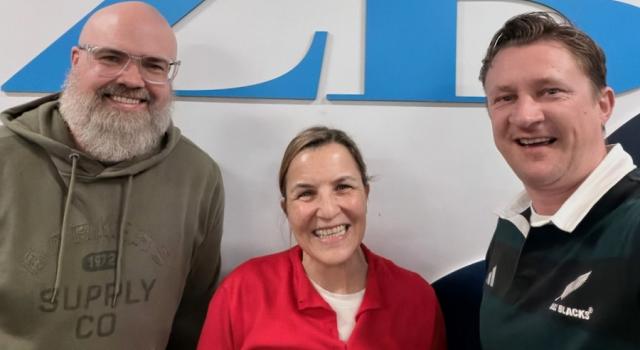
The issue was discussed with Eating Disorders Association of New Zealand chair Andrea Bonetto.
Bonetto brings both personal and family experience to the issue. She experienced binge eating disorder in her late teens and early 20s, before later supporting her daughter through anorexia nervosa.
She said her daughter’s illness initially appeared as an increased interest in healthy eating and exercise, behaviours many parents might ordinarily see as positive.
However, Bonetto said restrictive eating disorders can become increasingly obsessive, with warning signs including a growing preoccupation with food, calorie counting, changes in diet, excessive exercise or using exercise to compensate for eating.
She said families should take concerns seriously.
“If you think that there’s something that’s not quite right, it’s most likely something not quite right.”
Bonetto said eating disorders were not limited to teenage girls, with the organisation hearing from families concerned about people ranging from young children through to those in their 80s.
Psychotherapist Kyle MacDonald MacDonald said eating disorders were complex mental illnesses and could have serious physical consequences.
He said families could sometimes become caught in conflict around food, particularly when a person was restricting what they ate, but stressed that eating disorders should not be viewed as a simple choice.
Bonetto said treatment for restrictive eating disorders often required families to play an active role, particularly when a young person was unable to make safe decisions about food for themselves.
She said families also needed support, describing caring for someone with an eating disorder as an exhausting and often lonely experience.
Callers shared their own experiences of serious illness, treatment and recovery, including one man who described a five-year process of rebuilding his relationship with food after being hospitalised at a dangerously low weight.
Bonetto said recovery could take different forms and different lengths of time, but hope remained important.
“Recovery is possible at any time, at any stage.”