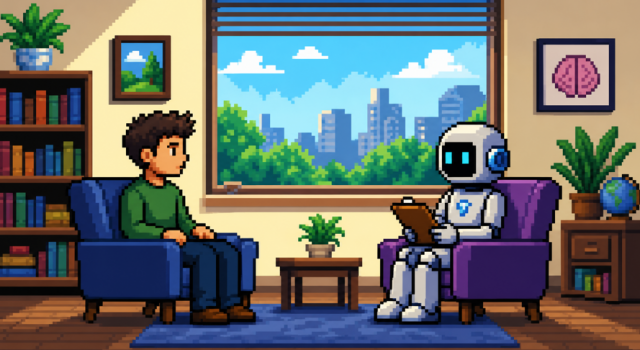
Artificial intelligence is increasingly becoming a place people turn to for emotional support, but questions remain over whether a chatbot can ever replace genuine human connection.
The issue was explored on The Nutters Club on Newstalk ZB, where host Hamish Williams and psychotherapist Kyle MacDonald examined the growing use of AI platforms such as ChatGPT and Google Gemini for mental health support.
MacDonald said emerging research suggested a significant number of adults and young people were already using AI chatbots to discuss emotions, relationships and personal difficulties. One Canadian study involving about 40,000 students found roughly one in five had used AI for help with feelings or relationship advice.
The accessibility of the technology appeared to be part of its appeal.
Unlike counselling or phone-based support services, AI can be available immediately, including late at night or during moments of distress.
The programme put that idea to the test live on air, with Williams speaking directly to an AI chatbot about his disappointment following the Warriors’ finals loss.
The AI responded by acknowledging the disappointment, asking questions about what was upsetting him and later suggesting practical ways to wind down, including stepping away from post-game discussion and doing something calming.
Williams said the exchange sounded remarkably similar to conversations commonly heard on The Nutters Club, while MacDonald acknowledged the chatbot had responded effectively once Williams asked for practical help.
However, MacDonald also warned that feeling supported was not necessarily the same as receiving effective mental health treatment.
He said AI could potentially be useful for simple strategies, such as calming exercises during panic or suggestions for becoming more active when feeling low, but should not be treated as a replacement for therapy, particularly when someone was severely distressed or suicidal.
Listeners offered sharply contrasting experiences.
Some described using AI during grief, panic attacks, workplace distress and loneliness, saying it had provided immediate reassurance and practical suggestions.
Others were deeply uncomfortable with the idea, arguing that a machine without emotions could never reproduce the empathy, physical presence or human connection that comes from talking with another person.
One caller summed up the concern by saying AI could be useful in many situations, but ultimately “it’s not a person”.
The AI itself was given the final word.
Asked what listeners should know about AI and mental health, it said AI was “not a replacement for real help”, but could act as a bridge when someone needed support in the middle of the night.
It added that real human help remained the most important destination.